
Table of Contents
ToggleOpen floor plans dominate modern homes, but all that square footage can feel more like a decorating challenge than a selling point. The secret? A well-placed sectional that carves out a proper living zone without blocking flow. Unlike traditional sofas that float awkwardly in an undefined space, sectionals anchor the room and create clear boundaries between kitchen, dining, and lounging areas. This guide walks through sizing, placement strategies, and the layout mistakes that turn a great room into a furniture warehouse. Whether working with 300 square feet or 800, the right sectional configuration changes everything.
Key Takeaways
- An open concept living room with a sectional creates defined zones without walls—the L-shape or U-shape acts as a structural anchor that guides traffic flow and signals the seating area to visitors.
- Proper sizing is critical: measure your usable living zone, not the entire open area, and use painter’s tape to outline the sectional’s actual footprint before ordering to avoid costly returns.
- Float your sectional 12 to 24 inches from the back wall, orient it toward your main focal point (fireplace, TV, or window), and pair it with a rug extending 12 to 18 inches beyond all edges—these elements work together to anchor the zone.
- Choose a rug size that suits your sectional (typically 9′ x 12′ or larger for L-shaped configurations) and use layered lighting at eye level to reinforce boundaries and create a cohesive living space.
- Avoid common mistakes like blocking natural light, ignoring electrical outlet placement, overcrowding with oversized coffee tables, and pushing furniture against walls—these habits undermine the open concept’s potential.
- Modular sectionals offer flexibility to reconfigure as your needs change, but secure connectors are essential to prevent pieces from shifting apart during use.
Why Sectionals Are Perfect for Open Concept Spaces
Open concept living rooms lack the natural room divisions that walls provide. A sectional does that job structurally. Its L-shape or U-shape creates an implied barrier that signals “this is the living area” without requiring physical partitions or awkward furniture clusters.
Visual weight matters in large spaces. A standard three-seat sofa looks lost in a 400-square-foot great room, but a five- or six-piece sectional fills the volume proportionally. It reads as intentional furniture, not leftovers pushed to the edges.
Sectionals also maximize seating without the clutter of multiple chairs. A typical L-shaped configuration seats six to eight people comfortably, crucial for homes where the living room doubles as the entertaining hub. The corner piece becomes prime real estate during movie nights or game days.
From a traffic flow perspective, sectionals guide movement. The back of the sofa naturally directs foot traffic around the seating zone rather than through it. This keeps pathways clear between the kitchen and other areas, which is critical in homes where the living room sits between high-traffic zones.
Finally, sectionals adapt. Most modern designs include modular pieces that reconfigure as needs change. Designers at Homedit frequently highlight this flexibility as a key advantage in evolving spaces. Swap the chaise from left to right, add an ottoman, or remove a seat when relocating, something a fixed sofa can’t offer.
Choosing the Right Sectional Size and Configuration
Scale kills more open concept layouts than any other factor. A sectional that works in a showroom might overwhelm, or disappear in, an actual living space. Start by determining the usable square footage of the living zone, not the entire open area. Subtract kitchen, dining, and walkway space to identify what’s actually available for seating.
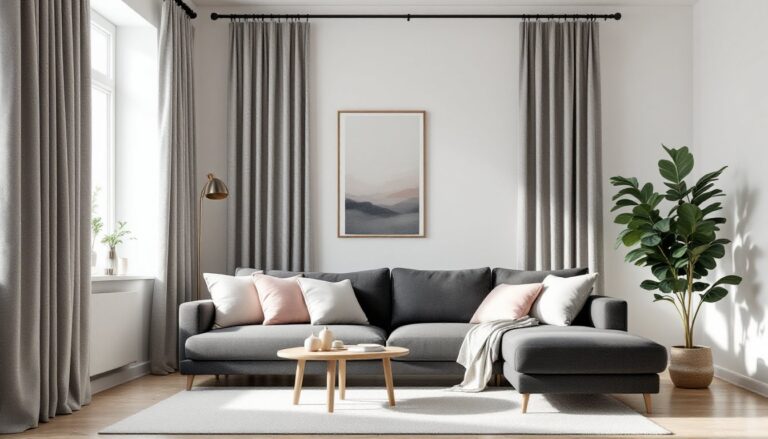
Configuration depends on room shape and entry points. L-shaped sectionals work well in square or slightly rectangular spaces, with the chaise extending into the open area. U-shaped or wraparound sectionals suit larger, more symmetrical rooms where the sofa can float in the center without blocking views or pathways.
Chaise placement matters. A right-arm-facing (RAF) chaise extends to the right when standing in front of the sectional: left-arm-facing (LAF) goes the opposite direction. Choose based on where windows, fireplaces, or media centers sit. The chaise should face the focal point, not a blank wall.
Depth is just as critical as length. Standard sectionals measure 36 to 40 inches deep, but deep-seat models run 42 to 45 inches. In open layouts, deeper seating can encroach on walkways. Measure the space between the sectional’s back and the nearest wall or furniture piece, 36 inches minimum is necessary for comfortable passage.
Modular versus fixed frames affect future flexibility. Modular sectionals allow rearrangement but may shift apart with use unless connectors are secure. Fixed-frame sectionals stay put but limit configuration changes. Choose based on whether the layout is permanent or likely to evolve.
Measuring Your Space for the Perfect Fit
Don’t eyeball this. Use a 25-foot tape measure and graph paper, or a digital floor planner. Measure the total length and width of the living zone, then mark these critical dimensions:
- Distance from back wall to edge of traffic pathway: This determines sectional depth.
- Length of the longest uninterrupted wall: This sets maximum sectional length if placing against a wall.
- Clearance to adjacent furniture: Coffee tables need 14 to 18 inches from the sectional’s edge: side tables require 24 to 30 inches for walkability.
Use painter’s tape on the floor to outline the sectional’s footprint at actual size. Live with the tape outline for a day or two. Walk around it, simulate sitting, and check sight lines to the TV or fireplace. If it feels cramped or blocks natural movement, adjust before ordering.
Account for door swing, reclining mechanisms, or chaise extensions that add functional depth. A reclining sectional may need an extra 10 to 12 inches of clearance behind it. Measure twice, because returns on large furniture are expensive and complicated.
Strategic Sectional Placement to Define Your Living Zone
Floating the sectional away from walls is the gold standard in open concept design. This creates a true room-within-a-room effect and allows traffic to flow around the seating area rather than forcing everyone through a single narrow path. Position the sectional 12 to 24 inches from the back wall, depending on room size.
Orient the sectional to face the main focal point, usually a fireplace, built-in media center, or picture window. The longest section should run parallel to the focal wall, with the chaise angled to create an L-shape that visually anchors the corner of the zone.
Avoid pushing the sectional into a corner unless space is extremely tight. Corner placement wastes the sectional’s ability to act as a spatial divider and traps people in the chaise seat. If a corner is unavoidable, make sure the chaise extends into the room, not against the wall.
In homes where the living area sits between the kitchen and a hallway, position the sectional perpendicular to the kitchen. The back of the sofa becomes a subtle divider that screens the seating area from cooking activity without blocking sightlines entirely. This works especially well in homes where the kitchen island runs parallel to the sectional’s back.
For open concepts with multiple seating areas (living + den, or living + breakfast nook), use the sectional to claim the primary zone. Pair it with a low-profile console table behind the sofa to further define the space and add surface area for lamps or decor. Recent modern home decor trends emphasize these console-backed sectionals as a functional design layer.
Consider asymmetry. A sectional doesn’t need to be centered on the room’s midpoint. Offset placement can balance other elements like a dining table or kitchen island, creating a more dynamic and less formulaic layout.
Creating Visual Flow Between Living Areas
Open concept living demands intentional visual cues to guide the eye and differentiate zones without adding walls. The sectional is one piece of that puzzle: rugs, lighting, and color repetition complete it.
Repeat materials and finishes across zones to unify the space. If the sectional upholstery is a textured linen, echo that texture in dining chair cushions or throw pillows in the adjacent breakfast nook. Carry wood tones from the coffee table into bar stools or shelving units. This creates cohesion without making everything match.
Ceiling treatments help define areas overhead. Consider a different paint color, coffered ceiling detail, or beam installation above the living zone. Even a simple ceiling medallion around a statement pendant light can subtly mark territory.
Maintain clear pathways with consistent width. Major walkways should measure 36 to 42 inches wide: secondary paths can narrow to 24 to 30 inches but shouldn’t feel like obstacle courses. The sectional’s placement should never force traffic into tight squeezes or awkward zigzags.
Use furniture height variation to create rhythm. Pair the sectional with a low-profile coffee table, then add taller elements like a floor lamp, bookshelf, or plant stand in the background. This layering prevents the flat, one-note look that plagues poorly planned open spaces.
Using Rugs and Lighting to Anchor Your Sectional
Area rugs are non-negotiable in open concept living. They visually ground the sectional and define the seating zone’s perimeter. The rug should extend 12 to 18 inches beyond the front edge of the sectional on all sides, large enough for all furniture legs (or at least front legs) to rest on it.
Standard rug sizes often fall short. An L-shaped sectional typically needs a 9′ x 12′ or 10′ x 14′ rug, depending on configuration. In very large rooms, a 12′ x 15′ rug may be necessary. Undersized rugs make the sectional look like it’s floating on a postage stamp.
Rug material affects both look and function. Wool or wool-blend rugs handle high-traffic areas and resist staining better than cotton or viscose. Low-pile or flatweave rugs work well under heavy sectionals, while high-pile shag styles can interfere with reclining mechanisms or make the furniture feel unstable.
Layered lighting reinforces the living zone’s boundaries. Combine three types: ambient (recessed cans or a central fixture), task (floor or table lamps flanking the sectional), and accent (picture lights, LED strips, or uplighting behind furniture). Each layer serves a function and adds depth.
Position lamps at seated eye level, 40 to 42 inches from the floor to the bottom of the shade when using end tables, or 58 to 64 inches for floor lamps. This prevents glare and creates a cozy, defined pool of light around the seating area. Many interior design tips emphasize this human-scale lighting approach as essential for comfort.
Common Layout Mistakes to Avoid
Blocking natural light is the most frequent error. Don’t place the sectional’s high back in front of a window unless absolutely necessary. If the only layout option blocks a window, choose a low-back sectional (under 32 inches tall) or one with an open arm design that minimizes visual obstruction.
Ignoring electrical outlets creates a tangled mess of extension cords snaking across the floor, both ugly and a tripping hazard. Map outlet locations before finalizing the sectional’s position. If outlets are scarce, consider having an electrician add a floor outlet in the center of the room. This is minor electrical work (typically under $300 in most markets) and dramatically improves layout flexibility.
Overcrowding the coffee table zone cramps the setup. A coffee table should sit 14 to 18 inches from the sectional’s edge, close enough to reach a drink, far enough to allow leg extension. Oversized coffee tables (wider than two-thirds the sectional’s length) dominate the sightline and make the space feel cluttered.
Matching everything kills visual interest. A sectional in the same color family as the walls, rug, and curtains creates a beige void. Introduce contrast through texture, pattern, or a bold accent color in pillows and throws.
Forgetting about scale in adjoining areas creates imbalance. If the sectional is a deep, bulky piece, pair it with a streamlined dining table and chairs, not another overstuffed set. The eye needs variation to register separate zones.
Pushing furniture against every wall is a closed-concept instinct that doesn’t translate. Open layouts thrive on floating arrangements. Leave breathing room between the sectional and walls, even if it’s just a foot. That negative space prevents the “showroom floor” look.
Finally, skipping a test sit before purchasing. Sectionals vary wildly in seat depth, cushion firmness, and back support. A too-deep seat makes it hard to stand: a too-firm cushion feels like a waiting room. If buying online, verify the return policy covers large furniture and who pays return shipping, it’s usually the buyer, and it’s expensive.