Table of Contents
ToggleA side table is one of those pieces that doesn’t demand attention until you need it, then suddenly, you’re balancing a coffee mug on the arm of your sofa or reaching too far for a phone charger. In a modern living room, the right side table does more than hold your stuff. It anchors a corner, balances a sofa, and ties together your design choices without trying too hard. Whether you’re working with a tight budget or ready to invest in something custom, understanding what makes a side table modern, and how to choose one that actually works in your space, saves time, money, and buyer’s remorse.
Key Takeaways
- A modern side table should sit 2 inches or less below your sofa arm height (typically 22–26 inches) to ensure comfortable access and balanced proportions.
- Modern side table design emphasizes clean lines, exposed materials, negative space, and timeless aesthetics—look for geometric shapes and minimal ornamentation without decorative hardware.
- Choose materials based on durability and maintenance: solid hardwood and powder-coated metal are low-maintenance, while glass and real marble require regular cleaning and sealing.
- Style your modern side table with restraint using only 3–4 items, leaving at least one-third of the surface empty, and mixing contrasting textures and finishes for visual interest.
- Pedestal, C-tables, nesting tables, and drum tables are the strongest modern side table styles for 2026, offering functional designs that maximize space without sacrificing aesthetics.
- DIY modern side table builds using hairpin legs, concrete slabs, or plywood boxes are budget-friendly alternatives ($30–$100) and can be completed in 2–4 hours with basic tools and safety precautions.
What Makes a Side Table ‘Modern’? Key Design Elements to Know
Modern design isn’t just a trend, it’s a philosophy rooted in clean lines, minimal ornamentation, and functional form. A modern side table strips away the fussy details you’d find on traditional or farmhouse pieces. No turned legs, no carved aprons, no decorative hardware.
Key characteristics include:
- Geometric shapes: Think perfect circles, sharp rectangles, or asymmetric forms. The silhouette is intentional and uncluttered.
- Exposed materials: Walnut veneer, powder-coated steel, marble slabs, or tempered glass, modern tables let the material speak. You won’t find paint disguising MDF.
- Negative space: The best modern designs incorporate open space as part of the composition. Hairpin legs, cantilevered tops, and floating shelves all emphasize lightness.
- Neutral or bold color blocking: White, black, gray, and natural wood dominate, but you’ll also see intentional pops of burnt orange, navy, or emerald on select pieces.
If the table looks like it could’ve been designed in 1955 or 2026 and you can’t tell the difference, it’s modern. Timelessness is the tell. Contemporary design sites like Design Milk regularly feature pieces that hit these marks, pay attention to how they photograph the negative space and material contrast.
Choosing the Right Modern Side Table for Your Living Room Space
Size and Proportion Guidelines
A side table that’s too tall or too short throws off the entire seating area. Here’s how to get the proportions right.
Start with your sofa or chair arm height. The table surface should sit within 2 inches of the arm height, slightly lower is fine, higher looks awkward and makes reaching uncomfortable. Most sofa arms fall between 24 and 26 inches, so look for tables in the 22- to 26-inch range.
For floor space, measure the footprint. In a tight layout, a 12- to 16-inch diameter or square table keeps traffic flowing. If you’ve got room to spare, an 18- to 24-inch table adds visual weight and more surface area for lamps or decor.
Depth matters when the table sits between a sofa and wall. Leave at least 24 to 30 inches of clearance for walking. If the table’s going into a corner or next to a chair with no through-traffic, you can go deeper.
Material and Finish Options
Materials dictate durability, maintenance, and the vibe of the room. Here’s what you’re working with:
Wood (solid or veneer): Walnut, oak, and teak are classic modern choices. Solid hardwood handles wear better than veneer, but quality veneer over plywood core is stable and more affordable. Finish options range from matte lacquer to oiled surfaces, oil requires occasional reapplication but hides scratches.
Metal: Powder-coated steel or aluminum frames are lightweight and industrial. Black matte is the most forgiving for fingerprints: brass and copper develop patina over time, which some people love and others hate.
Glass: Tempered glass tops (usually ⅜-inch to ½-inch thick) keep sightlines open in small rooms. They show dust and water rings instantly, so plan to wipe them down regularly.
Stone and concrete: Marble, travertine, or concrete tops bring texture and weight. Real marble stains easily, seal it with a penetrating sealer rated for natural stone. Concrete can be sealed but may still show water spots.
Mixed materials: A walnut top on hairpin legs or a marble disc on a steel frame adds visual interest without overcomplicating the design. Just make sure the joinery is solid, wobble is a dealbreaker.
Top Modern Side Table Styles for 2026 Living Rooms
Design trends shift, but certain modern styles keep showing up because they work. Here’s what’s holding strong in 2026.
Pedestal tables: A single central column supporting a round or square top. These maximize legroom underneath and look sculptural from any angle. Tulip-style bases in fiberglass or wood are seeing a resurgence.
C-tables: The top slides under a sofa or chair, bringing the surface closer to you. Great for small spaces or anyone who eats on the couch. Look for welded steel construction, bolted joints loosen over time.
Nesting tables: Two or three tables that stack together. Pull one out when you need it, tuck it back when you don’t. Powder-coated metal frames with wood or glass tops are the go-to combo.
Drum tables: Enclosed cylindrical forms, often with hidden storage inside. These anchor a space visually and double as occasional seating if the top is sturdy enough (check the weight rating).
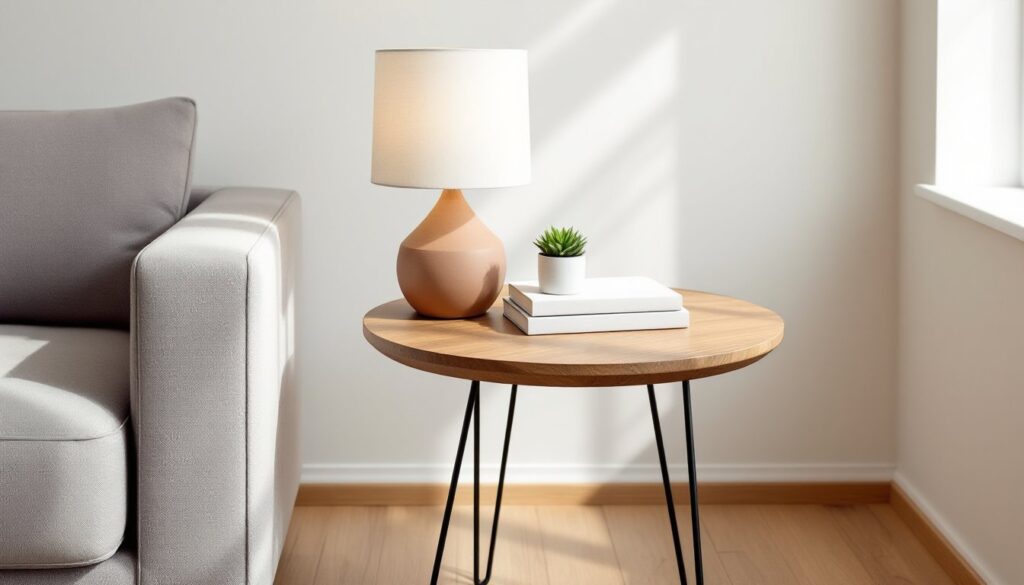
Live-edge slabs on minimal bases: A single slab of wood with natural edges, mounted on hairpin legs or a simple steel frame. This style leans mid-century modern but fits contemporary spaces if the rest of the room is dialed back.
Browsing curated collections like those on Dwell’s accent table shop gives you a snapshot of what’s actually selling and how different materials pair together in real products.
How to Style Your Modern Side Table Like a Pro
Styling isn’t about cramming the surface with tchotchkes, it’s about balance, height variation, and leaving breathing room.
Start with one anchor piece: a table lamp, a sculptural vase, or a stack of two to three books. This grounds the composition. If you’re using a lamp, the shade bottom should be roughly at eye level when you’re seated (around 40 to 42 inches from the floor for most setups).
Add one or two secondary elements at different heights. A small plant (real or realistic faux), a decorative object, or a tray to corral remotes and coasters. Keep the total number of items to three or four max, modern design thrives on restraint.
Leave at least one-third of the table surface empty. This makes the styling look intentional instead of cluttered and gives you room to set down a glass or phone.
Color and texture matter. If the table is wood, introduce metal or ceramic. If it’s glass, add something with weight and opacity. Contrast keeps it visually interesting.
Avoid matching everything. A lamp, vase, and frame all in the same finish look staged. Mix matte and gloss, rough and smooth, warm and cool tones.
For inspiration on how designers layer textures and use negative space, sites like Domino regularly publish room tours that break down styling choices in real homes, not just staged showrooms.
DIY Modern Side Table Ideas for Budget-Conscious Homeowners
Building your own modern side table isn’t complicated, and you don’t need a full shop. Here are three approachable builds.
Hairpin leg table: Buy a set of three-rod hairpin legs (available in 16-, 18-, or 28-inch heights) and a hardwood or plywood top. Cut the top to size with a circular saw, sand the edges smooth with 120-grit, then 220-grit sandpaper. Finish with Danish oil or matte polyurethane (coverage is roughly 500 square feet per quart). Screw the legs into the underside using the provided mounting plates. Total time: 2 to 3 hours. Cost: $40 to $80 depending on wood choice.
Concrete and steel frame: Build a simple rectangular frame from 1-inch square steel tubing (welded or bolted at the corners). Cast a concrete top using Quikrete 5000 in a melamine-lined form. Mix to a pourable consistency (about 6 parts mix to 1 part water by weight), pour, vibrate out air bubbles with a palm sander against the form, and let cure for 7 days under plastic. Seal with a concrete sealer rated for countertops. Attach the top with construction adhesive and angle brackets. Wear a dust mask when mixing and gloves when handling wet concrete. Cost: $50 to $100.
Plywood box with dowel legs: Cut ¾-inch birch plywood into four panels for a cube or rectangular box (a table saw or track saw gives the cleanest cuts, but a circular saw with a clamped straightedge works). Join with wood glue and finish nails or pocket screws. Drill holes in the bottom for 1½-inch hardwood dowels (cut to length), glue in place. Finish with paint or stain. Time: 3 to 4 hours. Cost: $30 to $60.
Safety notes: Always wear eye protection when cutting, hearing protection with power saws, and a respirator when applying solvent-based finishes indoors. Work in a ventilated area or outdoors when possible.
These builds won’t look custom-made, but they’ll look intentional, and that’s the point of modern design.