Table of Contents
ToggleShopping for a modern living room couch in 2026 means navigating a landscape where minimalist aesthetics meet practical durability. Unlike traditional overstuffed sofas or ornate Victorian settees, today’s modern couches prioritize clean lines, functional design, and materials that stand up to daily use. Whether furnishing a studio apartment or anchoring a sprawling open-concept living area, selecting the right couch involves more than liking how it looks in a showroom. Proportions, frame construction, upholstery performance, and how the piece integrates with existing architectural elements all play a role in long-term satisfaction.
Key Takeaways
- A modern living room couch prioritizes clean lines, exposed legs, and quality hardwood frames with mortise-and-tenon joinery rather than staples alone for long-term durability.
- Measure doorways, hallways, and stairwells before purchasing—a common mistake is selecting a sectional that fits the room but won’t navigate through entry points.
- Seat depth matters: standard modern couches range from 20 to 24 inches deep; deeper seats (26+ inches) encourage lounging but may leave shorter users without proper back support.
- Choose frame and upholstery materials strategically: hardwood frames outperform composites, while performance fabrics rated 50,000+ double rubs resist staining and pilling better than untreated natural textiles.
- Neutral color palettes (charcoal, taupe, greige) make modern couches versatile anchors for any decor, while solid fabrics dominate modern design—reserve patterns for easily swappable throw pillows instead.
- Modular and configurable modern couch designs let homeowners rearrange sections or add extensions without replacement, making them ideal for renters or anyone anticipating future layout changes.
What Defines a Modern Living Room Couch?
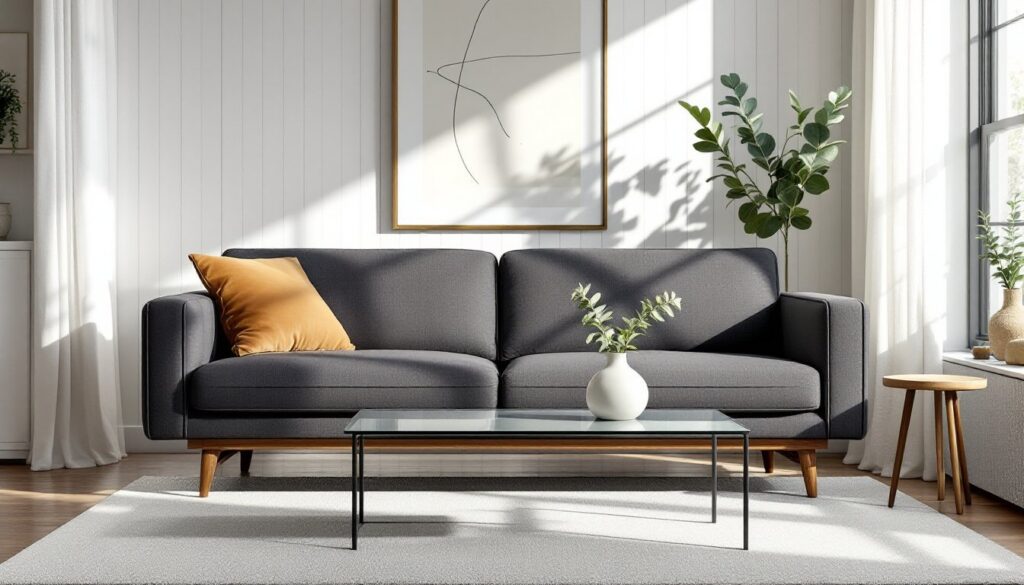
A modern couch distinguishes itself through geometry and restraint. Expect low-profile silhouettes, exposed legs (typically wood or metal), and upholstery that hugs the frame rather than billowing over it. Arms are often track-style (straight and narrow) or gently tapered, rarely rolled or scrolled.
Frame construction matters as much as aesthetics. Quality modern couches use kiln-dried hardwood frames (maple, oak, or birch) joined with mortise-and-tenon or dowel joinery, not staples alone. Corner blocks glued and screwed into place reinforce stress points where arms meet the seat deck. Budget pieces sometimes substitute engineered wood or metal frames: these can work for lighter use but won’t handle the same long-term loads.
Suspension systems range from sinuous (S-shaped) springs to eight-way hand-tied coil springs. Sinuous springs keep the profile low and work well for firm seating. Eight-way tied coils offer more give and durability but add height and cost. Cheaper options use webbing or elasticized straps, acceptable for occasional seating but prone to sagging within a few years.
Modern couches also emphasize modularity and adaptability. Many contemporary designs let homeowners reconfigure sections, swap arm styles, or add chaise extensions without replacing the entire piece. This flexibility suits renters or anyone anticipating layout changes down the road.
Popular Modern Couch Styles for 2026
Mid-Century Modern and Scandinavian Influences
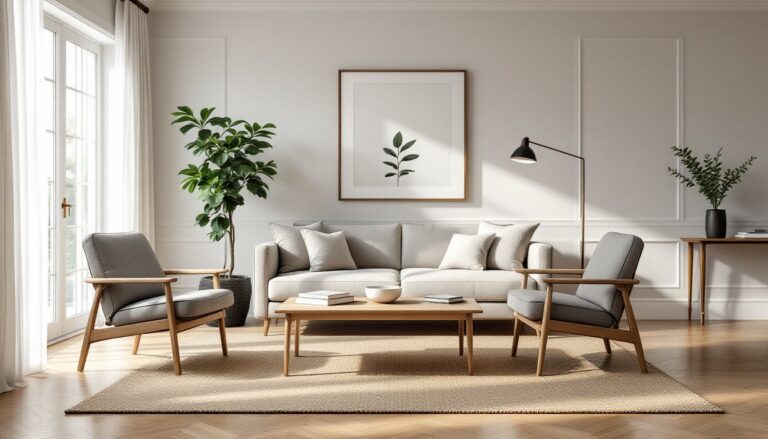
Mid-century modern remains a cornerstone of contemporary furniture, characterized by tapered wooden legs, button tufting, and compact proportions. Think narrow arms that don’t eat into seating width and seat cushions that sit atop, rather than sinking into, the frame. Walnut and teak finishes dominate, though lighter ash and oak options appeal to Scandinavian-leaning spaces.
Scandinavian (or Nordic) design overlaps heavily with mid-century but leans cooler in palette and often incorporates natural textiles like wool bouclé or linen blends. These modern sofas typically feature removable cushion covers for easier cleaning, a practical touch for households with kids or pets. Legs are shorter and chunkier than classic mid-century spindles, giving a grounded, hygge-friendly feel.
Both styles work well in smaller rooms because their visual lightness (exposed legs, slim arms) keeps sight lines open. Avoid placing these couches flush against walls: floating them even six inches out showcases the leg design and makes the room feel less cramped.
Minimalist and Modular Designs
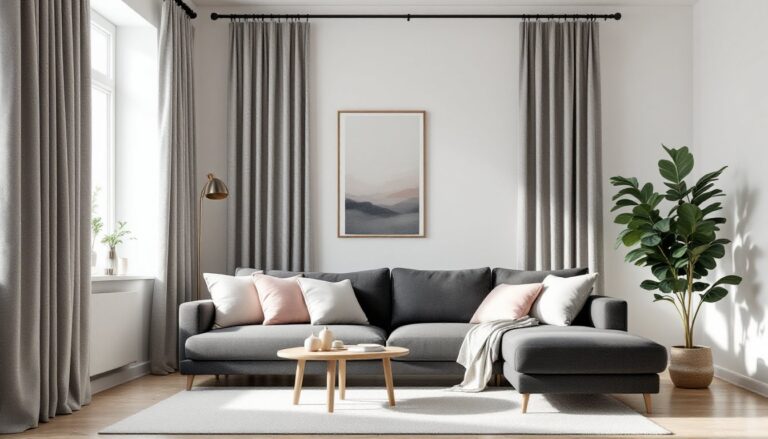
Minimalist couches strip away decorative elements entirely. No tufting, no contrasting piping, no visible hardware. Upholstery wraps the frame seamlessly, and legs may be concealed or reduced to low metal brackets. The result reads almost architectural, a horizontal plane anchoring the room.
Modular sectionals dominate this category. Individual seats, corner wedges, and ottomans connect via hidden brackets or interlocking clips, letting owners rearrange configurations seasonally or when moving. L-shaped, U-shaped, and straight three-plus-chaise setups are standard starting points. Check that connectors are metal rather than plastic: plastic clips crack under repeated repositioning.
Fabric choices in minimalist designs often favor performance textiles that resist staining and pilling. Many manufacturers now offer solution-dyed acrylic or polyester-blend fabrics rated for 50,000+ double rubs (Wyzenbeek or Martindale tests), meaning they’ll hold up to years of daily use. Natural fabrics like cotton and linen look beautiful but require more maintenance and aren’t ideal for high-traffic households unless treated with stain repellents.
Choosing the Right Size and Configuration
Measure the room and doorways before falling for any couch. A common mistake: ordering a sectional that fits the living room but won’t clear the hallway or stairwell. Measure door widths, stair turns, and hallway clearances with a tape measure, noting any tight corners that might require angled maneuvering.
Scale to the room: In spaces under 150 square feet, a 76- to 84-inch sofa typically works. For rooms 200+ square feet, 90- to 108-inch sectionals or paired seating (sofa plus loveseat or two accent chairs) balance the space better. Leave at least 18 inches between the couch and coffee table for comfortable legroom, and maintain 30 to 36 inches of walkway clearance around furniture perimeters.
Seat depth matters more than many buyers realize. Standard modern couches run 20 to 24 inches deep, measured from the front edge to the backrest. Deeper seats (26+ inches) encourage lounging but make it harder for shorter individuals to sit upright with back support. Test in person if possible, or order fabric swatches and request detailed dimension diagrams.
Configuration options:
- Straight sofa: Classic three-seater, easiest to move and rearrange.
- Loveseat or apartment sofa: 58 to 72 inches, fits tight spaces.
- Sectional (L-shape): Maximizes corner seating: chaise can face left or right.
- U-shaped sectional: Seats six-plus: requires large, open floor plans.
- Sleeper sofa: Hidden mattress folds out: frame must be robust to handle nightly use if hosting frequently.
For open-concept layouts, consider using the couch as a room divider. Floating a sectional perpendicular to a wall delineates the living zone from dining or kitchen areas without blocking sight lines.
Materials and Upholstery Options
Frame and leg materials set the durability baseline. Hardwood frames (oak, maple, birch) outlast softwoods and composites. Look for corner blocks, glued-and-screwed joints, and at least 1-inch-thick solid wood rails. Metal frames (welded steel or aluminum) work well in industrial-modern designs and can support high weight loads, but they transmit more vibration and sound than wood.
Legs come in solid wood, metal (powder-coated steel, brushed nickel, brass), or molded plastic. Solid wood and welded metal are the most durable. If legs are stained or painted, check that finish matches the sample: wood tones vary between batches. Adjustable leveling feet hidden inside leg tips help compensate for uneven floors, worth asking about if living in an older home.
Upholstery fabric performance:
- Linen: Breathable, natural texture: wrinkles easily and stains without treatment. Best for low-traffic, adult-only households.
- Cotton: Soft and affordable: fades in direct sunlight and absorbs spills quickly. Consider Scotchgard or similar protectants.
- Wool/Bouclé: Durable, resists pilling, adds warmth. Can be scratchy: check for blended versions with synthetic softeners.
- Polyester/Microfiber: Stain-resistant, easy to clean, budget-friendly. Can look flat or synthetic under bright light.
- Leather (full-grain, top-grain): Ages well, wipes clean, develops patina. Requires conditioning every 6–12 months. Avoid bonded or split leather, which peels within a few years.
- Performance fabrics (Crypton, Sunbrella, Revolution): Engineered for stain/moisture/fade resistance. Ideal for families, pets, or sunny rooms. Slightly stiffer hand than natural textiles.
Cushion fill affects both comfort and longevity. High-resilience (HR) foam density of 1.8 lbs/ft³ or higher maintains shape better than standard foam. Down-wrapped foam cores blend support with softness but need regular fluffing. Avoid all-polyester fiberfill in seat cushions, it compresses fast and doesn’t recover.
Color Palettes and How to Match Your Space
Neutral palettes, charcoal, taupe, greige, ivory, and soft gray, anchor most modern living rooms because they pair with rotating accent colors and don’t compete with artwork or architectural features. These tones also photograph well for resale or rental listings, a consideration if planning to move within five years.
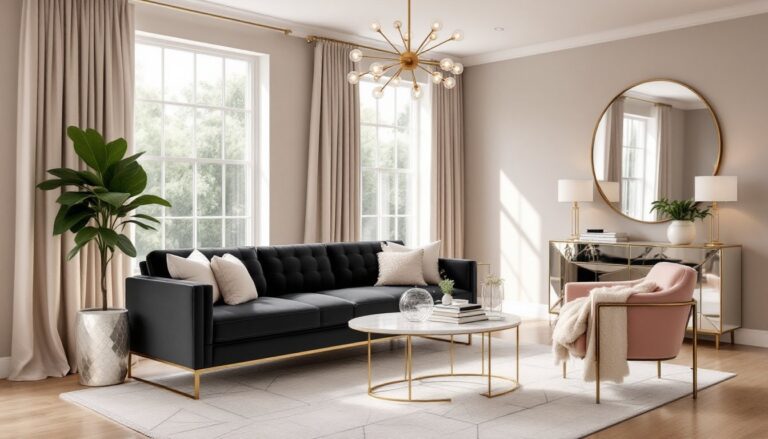
Bold color strategies work when the couch becomes the room’s focal point. Deep jewel tones (emerald, navy, burnt orange) add richness without reading as dated, especially when balanced by white walls and light wood floors. Avoid trendy pastels (millennial pink, mint) unless committed to a full refresh when tastes shift: these shades date quickly and limit future decor flexibility.
Matching upholstery to flooring and trim requires attention to undertones. Gray couches with blue undertones clash with warm oak or walnut floors: opt for greige or taupe instead. Cream or ivory upholstery shows soil on cool-toned concrete or tile but glows against warm hardwood. Bring home large fabric swatches (at least 12×12 inches) and view them in the actual room under morning, midday, and evening light before committing.
Pattern considerations: Solid fabrics dominate modern design, but subtle textures (basket weave, herringbone, small-scale geometric) add visual interest without busyness. Large-scale prints or florals read traditional and pull against the clean lines of modern frames. If pattern is a must, reserve it for throw pillows and blankets, easier and cheaper to swap out.
Incorporating trends from leading design sources helps keep the space current without overhauling furniture every season. Accessories, lighting, and smaller decor pieces offer simpler refresh opportunities than replacing a major upholstered piece. For broader inspiration on integrating modern furniture into cohesive room schemes, exploring current interior trends provides context on how designers balance function with visual appeal.
Final integration tip: Step back and assess the couch in the context of ceiling height and wall color. A low-slung modern couch can make an 8-foot ceiling feel taller by emphasizing horizontal lines, while a bulky sectional in a room with dark walls may shrink perceived space. Use painter’s tape on the floor to outline the couch footprint before delivery, confirming clearances and visual balance from multiple angles.