Table of Contents
ToggleSwivel chairs have evolved far beyond the office. Today’s modern swivel chairs combine sculptural design with practical mobility, making them one of the most versatile seating options for a living room. Whether anchoring a reading nook or floating in a conversational furniture cluster, a well-chosen swivel chair lets occupants turn toward the TV, fireplace, or guests without dragging furniture across the floor. In 2026, designers are leaning into bold silhouettes, sustainable materials, and mechanisms that glide quietly on ball-bearing bases. This guide covers why swivel chairs work, which styles deliver impact, and how to select and position one that elevates both form and function.
Key Takeaways
- Modern swivel chairs adapt to multi-functional living rooms by offering 360-degree rotation without relocating furniture, making them ideal for homes that shift between entertainment, work, and social activities.
- Quality swivel chairs feature ball-bearing mechanisms, solid hardwood frames, and high-resiliency foam to ensure smooth, wobble-free rotation and durability that lasts years, not months.
- Popular modern swivel chair styles include mid-century barrel designs with walnut finishes and contemporary sculptural options with bold geometry; choose based on your room’s aesthetic and the chair’s functional role.
- Select performance fabrics with 30,000+ double-rub counts for high-traffic homes, and verify seat height (16–18 inches) matches your sofa to maintain level sightlines during conversation.
- Strategic placement—such as anchoring conversational clusters at 45-degree angles or floating in open floor plans with area rugs—transforms a swivel chair into an integrated, high-impact furniture piece rather than an awkward accent.
Why Modern Swivel Chairs Are Perfect for Today’s Living Rooms
Modern living rooms rarely stick to a single focal point. Open floor plans blur the line between kitchen, dining, and lounge zones, and families shift activities throughout the day, movie nights, work-from-home video calls, game nights, and casual conversation. A swivel chair adapts in real time.
Mobility without relocation. Unlike a stationary armchair, a swivel seat rotates a full 360 degrees on a concealed base, usually a five-star metal hub or a disc-style pedestal. Ball-bearing or nylon-glide mechanisms ensure smooth, quiet rotation, even on hardwood or tile. This lets one person follow a conversation, turn toward a screen, or pivot to grab a side table without standing.
Space efficiency. In smaller living rooms, every square foot counts. A swivel chair placed between two activity zones, say, angled toward both a media console and a window, eliminates the need for duplicate seating. It also reduces traffic-lane clutter because occupants can swivel rather than shift the entire chair.
Design flexibility. Modern swivel chairs ship in silhouettes that range from barrel-back club chairs to cantilevered lounge shells. Many feature upholstered frames in performance fabrics, tight-weave polyester blends or solution-dyed acrylics, that resist stains and fading under sunlight. Metal and wood accents, like walnut-veneer plinths or powder-coated steel bases, add architectural detail that static chairs often lack.
Ergonomic benefits. Because the sitter controls rotation, swivel chairs encourage dynamic posture changes. That’s healthier for long reading sessions or binge-watching than locking into a fixed position. Look for models with lumbar contours or cushioned headrests if extended use is the goal.
Top Styles of Modern Swivel Chairs to Consider
Swivel chairs fall into design families defined by era, geometry, and materiality. Choosing a style hinges on the room’s existing aesthetic and the chair’s functional role.
Mid-Century Modern Swivel Chairs
Mid-century designs lean on organic curves, tapered legs, and warm wood tones. Classic examples include barrel-back swivel chairs with walnut-stained plywood shells and foam cushions upholstered in leather or linen. The base is typically a four-prong cruciform in turned walnut or oiled teak, sometimes fitted with a return-swivel mechanism that gently resets the chair to center when unoccupied.
Key features:
- Low-profile silhouettes (seat height around 16–18 inches) that pair well with low-slung sofas and platform coffee tables.
- Exposed wood frames that showcase joinery, dovetails, splined miters, or bent-laminate shells.
- Neutral or earthy upholstery: camel leather, olive tweed, or charcoal wool.
These chairs work in spaces with Scandinavian, Japandi, or California-casual interiors. They’re also light enough, usually 35–50 pounds, to reposition without a dolly. When selecting mid-century swivel chairs, verify that the wood finish is sealed with water-based polyurethane or hard wax oil: lacquer can yellow under UV exposure.
Contemporary Sculptural Designs
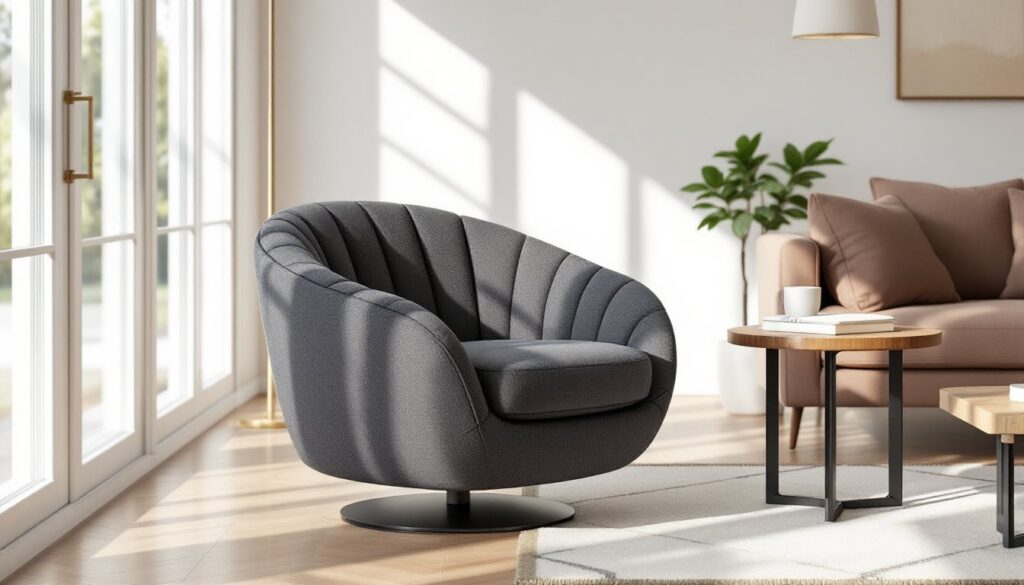
Contemporary swivel chairs prioritize bold geometry and unexpected materials. Think molded fiberglass shells, channel-tufted velvet cocoons, or cantilevered steel frames with floating seat pans. Many leverage industrial manufacturing techniques, rotational molding, CNC-cut plywood, or injection-molded polypropylene, to achieve shapes that would be cost-prohibitive in traditional upholstery.
Standout characteristics:
- Monolithic forms: seamless shells in matte or gloss finishes (powder-coated steel, gel-coated fiberglass, or thermoformed ABS plastic).
- High backs and enveloping wings that create visual drama and acoustic privacy in open layouts.
- Mixed-material bases: brushed stainless steel discs, blackened steel tripods, or cast-aluminum pedestals.
Sculptural swivel chairs often serve as statement pieces. Interior designers frequently feature them in modern design showcases where a single chair anchors a minimalist vignette. Because these designs lean heavy on aesthetics, confirm the swivel mechanism is commercial-grade, look for dual ball-bearing races rated for at least 100,000 rotations. Cheaper versions use plastic bushings that bind or squeak within months.
Fabric and finish notes: Performance velvets (polyester pile with stain-resist treatments) are popular for sculptural chairs because they highlight curves under directional lighting. Leather remains durable, but full-grain hides will patina: if that’s undesirable, specify pigmented or corrected-grain leather with a protective topcoat.
How to Choose the Right Swivel Chair for Your Living Room
Selecting a swivel chair requires balancing dimensions, material durability, mechanism quality, and aesthetic coherence. Start with measurements.
1. Measure the footprint and clearance.
Swivel chairs need radial clearance, the diameter of a circle traced by the chair’s widest point (usually the armrests or backrest) as it rotates. Measure the space where the chair will sit, then add 6–12 inches on all sides. For example, a 32-inch-wide barrel chair rotates through a roughly 38–44-inch diameter: budget at least 48 inches to avoid scraping adjacent furniture or walls.
Seat height matters for ergonomics. Standard living-room seat heights run 16–18 inches: pair that with sofa seat heights to keep sightlines level during conversation. Chairs taller than 19 inches can feel perched: below 15 inches, getting in and out becomes awkward for most adults.
2. Evaluate the swivel mechanism.
Flip the chair or review the spec sheet. Quality swivel bases use:
- Ball-bearing races (metal spheres in a hardened-steel channel) for smooth, wobble-free rotation.
- Return-to-center springs (optional but nice) that gently realign the chair when vacated.
- Locking pins (rare in residential models but useful if you want to disable swivel near toddlers or on thick rugs).
Avoid chairs that rely solely on a friction washer, a plastic or felt disc sandwiched between two plates. These wear quickly under load and bind on uneven floors.
3. Assess frame and cushion construction.
Lift the chair. Solid hardwood or engineered-wood frames (plywood with hardwood corner blocks) feel substantial and won’t flex. Kiln-dried lumber resists warping: green or air-dried wood can crack as it acclimates indoors.
Cushions should use high-resiliency foam (HR foam, density ≥1.8 lb/ft³) or a blend of HR foam over a pocket-coil core. Polyurethane foam below 1.5 lb/ft³ compresses into a pancake within a year. Down-wrapped foam combines support with a soft initial sit but requires regular fluffing.
4. Match upholstery to use case.
- High-traffic homes or pets: Performance fabrics with 30,000+ double-rub counts (Martindale or Wyzenbeek abrasion tests). Solution-dyed acrylic (trade name Sunbrella) resists fading and cleans with diluted bleach.
- Low-traffic, adult spaces: Natural linen, wool bouclé, or top-grain leather. These materials age gracefully but stain more readily.
- Allergy concerns: Avoid feather fills and opt for removable, machine-washable covers.
5. Consider the aesthetic role.
Is the chair a neutral anchor or a color accent? Neutral tones, warm grays, taupes, or soft whites, complement evolving decor. Bold hues (terracotta, navy, emerald) create focal points but lock you into a palette. Home decor trends in 2026 favor earth tones and textured fabrics over high-gloss or overly saturated finishes, so a chair in rust-colored bouclé or sage linen will stay relevant longer than one in neon or metallics.
Placement and Styling Tips for Maximum Impact
Placement dictates whether a swivel chair feels integrated or awkward. Follow these field-tested strategies.
Anchor conversational clusters.
Position the swivel chair at a 45-degree angle between a sofa and loveseat, forming a triangle with the coffee table at center. This layout encourages eye contact and lets the sitter pivot toward whoever’s speaking. Keep 18–24 inches between seat edges for comfortable legroom.
Float the chair in open floor plans.
Rather than pushing furniture against walls, float a swivel chair in the middle of the room, oriented toward a view or fireplace. Use an area rug to define the seating zone, extend the rug at least 12 inches beyond the chair’s rotational footprint. A low-pile wool or flatweave rug (pile height ≤0.5 inch) won’t interfere with swivel movement: high-pile shags can catch the base.
Pair with a side table or floor lamp.
Swivel chairs lack built-in storage, so a C-table (a table with a C-shaped base that slides under the chair arm) or a small round pedestal keeps drinks and remotes within reach. For reading, add a swing-arm floor lamp with an adjustable head: position it to the chair’s left or right so the sitter can swivel without knocking the shade.
Balance scale with nearby furniture.
A barrel chair with a 32-inch diameter looks proportional beside a standard three-seat sofa (84–96 inches wide). Oversized lounge swivels, some exceed 40 inches wide, risk dwarfing a loveseat or crowding a narrow room. Measure twice: returns on upholstered furniture often incur restocking fees.
Protect floors from metal bases.
Metal swivel bases can scratch hardwood or scuff tile. Apply adhesive felt pads (3M or similar, ≥3 mm thick) to every contact point on the base. Replace pads every six months as they compress and shed fibers. On luxury vinyl plank (LVP) or engineered hardwood, check that the manufacturer allows swivel furniture: some warranties exclude damage from rotating loads.
Layer textures for depth.
Pair a leather swivel chair with a chunky knit throw and a linen pillow to soften the look. Velvet or bouclé chairs benefit from smooth contrast, a sleek metal side table or a glass-top coffee table prevents the room from feeling overly plush. Mixing textures adds visual interest without requiring bold colors.
Conclusion
Modern swivel chairs deliver flexibility that static seating can’t match, adapting to shifting activities and sightlines without rearranging the entire room. Prioritize a quality swivel mechanism, durable upholstery, and proportional sizing to ensure the chair performs as well as it looks. With thoughtful placement and a style that complements existing furnishings, a swivel chair becomes the living room’s most versatile, and most-used, seat.