Table of Contents
ToggleDecorative trays aren’t just for serving drinks, they’re one of the fastest ways to turn a cluttered coffee table into a curated display. A well-styled tray corrals remotes, candles, and coasters into a cohesive vignette, giving your living room that pulled-together look without a major investment. Whether you’re working with a sleek modern console or a rustic ottoman, the right tray setup anchors your decor and makes daily reset easier. This guide walks through practical styling formulas, seasonal swaps, and the mistakes that make trays look cluttered instead of curated.
Key Takeaways
- Decorative trays create visual boundaries and reduce clutter by grouping objects into a single focal point, making your living room look more curated and intentional.
- Apply the Rule of Threes—anchor items at varying heights with 30–40% negative space—to achieve balanced living room tray decor ideas without overcrowding.
- Mix contrasting textures and materials (glass, ceramic, brass, wood) to add depth and professional polish to your tray styling.
- Seasonal swaps require only one or two accent piece changes: fresh florals and citrus for spring/summer, warm metals and darker candles for fall/winter.
- Choose tray sizes that occupy one-third to one-half of your coffee table’s surface, and prioritize non-slip pads or handles for functionality and easy relocation.
- Balance beauty with utility by ensuring remotes, coasters, and everyday essentials remain accessible without compromising the aesthetic appeal of your display.
Why Trays Are the Secret to Polished Living Room Decor
Trays create visual boundaries. Without one, decorative items scatter across a coffee table and compete for attention. A tray groups objects into a single focal point, which your eye reads as one element instead of five. This reduces visual clutter even when the surface is full.
They also protect surfaces. Hardwood and stone tables show water rings and scratches over time. A tray acts as a buffer zone for candles, drinks, and planters, keeping spills and condensation off expensive finishes. Choose materials like lacquered wood, ceramic, or powder-coated metal that wipe clean.
Function matters as much as form. A tray corrals everyday essentials, remotes, coasters, matchbooks, so they don’t migrate across the table. When guests arrive, you can lift the entire tray and stash it in a cabinet, leaving a clean surface for snacks or games. That kind of flexibility is hard to beat in a busy household.
Classic Coffee Table Tray Styling Ideas
The Rule of Threes
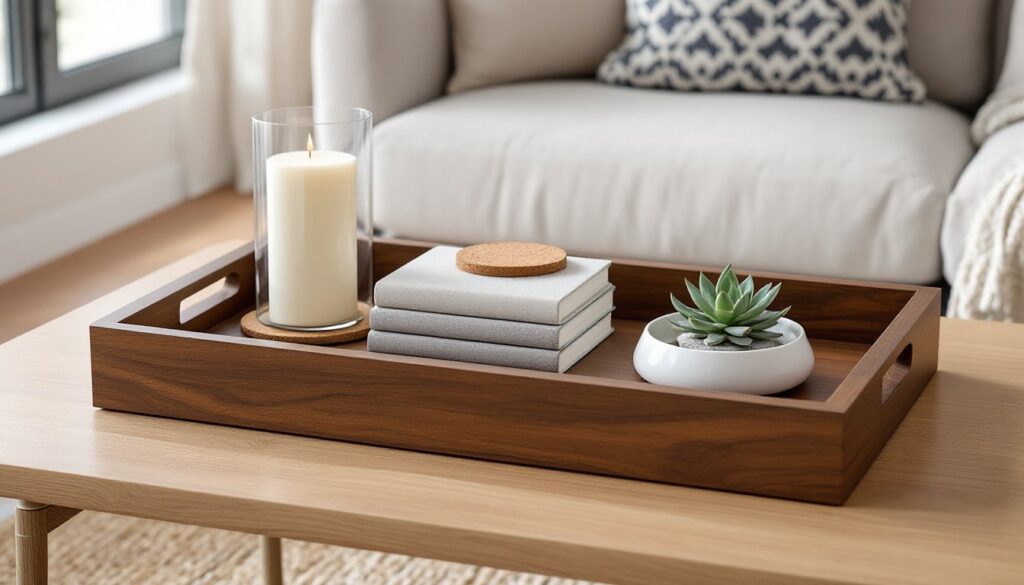
Start with three anchor items of varying heights: a tall element (candle, vase, or bottle), a medium element (stack of books, decorative box), and a low element (dish, succulent, or object d’art). This triangle arrangement creates visual interest without crowding. Leave 30–40% of the tray surface empty, negative space prevents the setup from looking crammed.
Layered Texture Formula
Combine materials that contrast: smooth glass beside rough ceramic, polished brass next to matte wood. Professional stylists favor textured surfaces and mixed materials to add depth without adding clutter. Pair a linen-bound book with a marble dish and a leather coaster holder. The mix keeps the eye engaged.
Everyday Essentials Display
For households that actually use their coffee tables, build the tray around function. Place a candle in a hurricane glass (prevents wax drips), a small dish for keys or jewelry, and a coaster stack in a holder. Add one decorative element, a sprig of eucalyptus in a bud vase or a small sculptural object, to keep it from looking purely utilitarian. Swap the greenery weekly to keep it fresh.
Seasonal and Themed Tray Decor Inspiration
Seasonal swaps don’t require a complete overhaul. Keep your tray base year-round and switch one to two accent pieces with the calendar.
Spring/Summer: Replace heavy candles with a clear glass vase holding fresh-cut stems (hydrangeas, peonies, or grocery-store tulips last 5–7 days). Add a small bowl of lemons or limes for color and a subtle citrus scent. Swap dark coasters for natural linen or cork.
Fall/Winter: Introduce warm metals like brass or copper candleholders. A small wooden dough bowl filled with mini pumpkins, pine cones, or ornaments works for October through December. Taper candles in darker tones (charcoal, forest green, burgundy) add height and a cozy feel during shorter daylight hours.
Holiday Themes: For gatherings, commit to a color story, red and gold for Christmas, blues and whites for Hanukkah, pastels for Easter. Keep décor low-profile (under 6 inches tall) so guests can see across the table during conversation. Avoid anything with strong fragrance if you’re serving food: competing scents clash.
Ottoman Tray Styling for Function and Flair
Ottomans upholstered in fabric need a rigid tray base to create a stable surface. Without it, drinks tip and remotes slide into the cushion. Look for trays with non-slip pads or feet on the underside, rubber grips or cork dots prevent shifting when someone bumps the ottoman.
Size matters here. The tray should cover 50–70% of the ottoman’s top surface. Too small, and it looks like an afterthought. Too large, and it defeats the purpose of the soft seating. For a 36-inch square ottoman, a 20–24-inch tray hits the sweet spot.
Styling differs slightly from hard coffee tables. Keep the tray lighter in weight and visual mass, ottomans already anchor a room with their bulk. Stick to two or three streamlined items: a candle, a small plant, and a stack of two books max. Homes featured on apartment styling guides often use ottomans as flexible seating, so keep décor easy to remove when you need the surface for feet or extra guests.
Choosing the Right Tray for Your Living Room
Material and Durability
Wood trays (walnut, oak, acacia) suit traditional and rustic spaces. Look for sealed or lacquered finishes that resist water. Unfinished wood stains easily and requires annual sealing.
Metal trays (brass, stainless steel, powder-coated iron) work in modern and industrial settings. Brass develops patina over time: if you prefer the polished look, plan to buff it every few months. Powder-coated finishes chip if dropped on tile or concrete.
Ceramic and stone trays (marble, terrazzo, glazed stoneware) add weight and luxury but crack if knocked off the table. Best for homes without young kids or large dogs.
Size and Proportion
The tray should occupy one-third to one-half of your coffee table’s surface. On a 48-inch rectangular table, a 16 x 24-inch tray balances decor and usable space. Round trays soften angular furniture: rectangular trays echo the lines of most coffee tables and ottomans.
Edge Style
Handles add function, easier to move when cleaning or rearranging. Raised edges (1–2 inches) contain spills and prevent items from sliding off. Flat or rimless trays create a sleeker look but offer zero containment. Match the style to your household’s needs.
Common Tray Styling Mistakes to Avoid
Overcrowding tops the list. If objects touch or overlap, you’ve gone too far. Remove one item and reassess. The tray should look intentional, not like a junk drawer.
Ignoring scale. All small objects read as cluttered: all large objects compete. Vary heights and footprints. A tall candlestick beside a low dish creates rhythm. Three items of identical height look static.
Skipping the anchor. Every tray needs one substantial piece, a stack of books, a chunky candle, a ceramic bowl, that grounds lighter elements. Without it, the arrangement feels floaty and temporary.
Forgetting function. Decorative trays on coffee tables get used. If you can’t set down a glass without knocking over a tchotchke, the styling fails. Design inspiration from interior styling platforms often features trays that balance beauty with real-world use, remotes tucked in a dish, coasters within reach.
Matching everything. A tray full of items in the same color or material looks flat. Contrast is key: smooth and rough, matte and glossy, organic and geometric. That tension creates visual interest.
Conclusion
A well-chosen tray transforms a coffee table from a landing zone into a design statement. Start with the right size and material for your space, build around three varied objects, and leave breathing room. Swap seasonal accents to keep the look current without starting from scratch. When the setup feels effortless, and you can still find the remote, you’ve nailed it.