Table of Contents
ToggleMerging traditional craftsmanship with sleek, modern lines creates a living room that feels both grounded and fresh. A modern classic living room doesn’t ask you to choose between grandmother’s wingback chair and a minimalist sectional, it lets you have both, as long as you’re intentional about scale, symmetry, and restraint. This design approach rewards careful editing: too much ornament tips the room into stuffy formality, while too much minimalism can feel cold. Getting the balance right means knowing which classic elements anchor the space and which contemporary touches keep it breathing.
Key Takeaways
- A modern classic living room balances traditional architectural elements like crown molding and rolled-arm sofas with contemporary finishes and lighter palettes to avoid feeling stuffy or cold.
- Start with a neutral foundation sofa in natural fabrics like linen or cotton-blend paired with accent chairs, ensuring consistent scale and leaving 30–36 inches of clearance between the sofa and coffee table for proper traffic flow.
- Use a restrained color palette anchored in soft whites, warm grays, and greiges with muted accent colors like deep navy or sage green to let furniture forms and architectural details take center stage.
- Layer three types of lighting—ambient, task, and accent—with dimmers to shift your modern classic living room from bright and functional by day to warm and intimate in the evening.
- Add textural depth through natural materials like linen, wool rugs, marble, and polished wood, while keeping finishes matte or satin to maintain the refined aesthetic without appearing dated.
- Invest in quality small details like screwless switch plates, solid wood doors, and brushed brass hardware that elevate the entire space for under $200 while honoring the principle that intentional design always beats trends.
What Defines a Modern Classic Living Room?
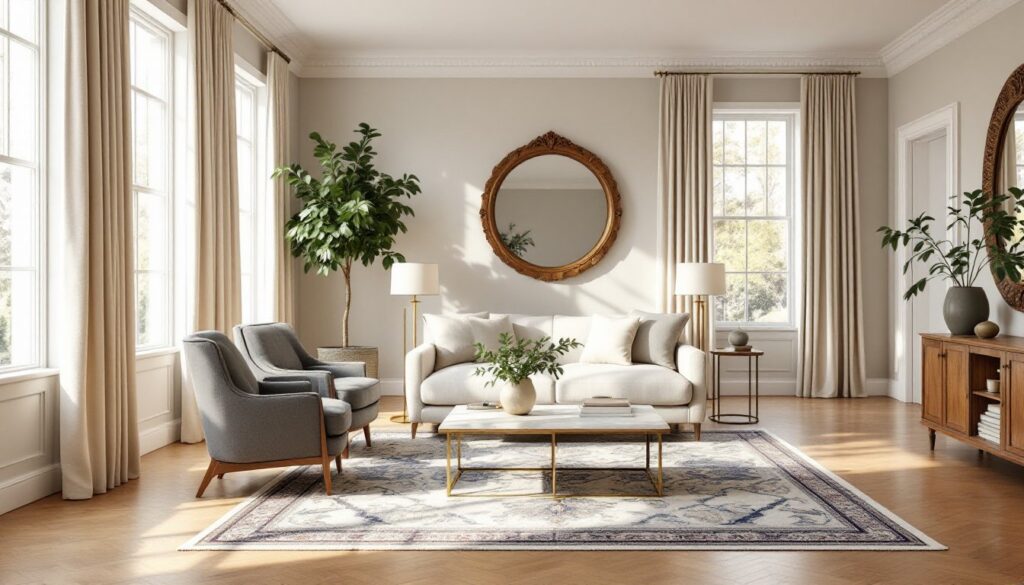
A modern classic living room pulls architectural and furniture forms from traditional European and American design, think Georgian moldings, rolled-arm sofas, and paneled wainscoting, but strips away heavy fabrics, fussy trims, and dark wood stains in favor of cleaner profiles and lighter palettes. The bones are classic: the finish is contemporary.
Key characteristics include symmetrical furniture arrangements (matching table lamps, centered sofas, balanced artwork), quality materials over trendy finishes (hardwood floors, natural stone, linen upholstery), and a restrained color palette that leans neutral but isn’t afraid of a bold accent. Crown molding and baseboards are often painted in crisp white or soft gray rather than stained, and windows stay uncluttered, simple drapery panels in natural fibers replace heavy swags.
This style also emphasizes proportion and scale. A modern classic room avoids both oversized sectionals that swallow the floor plan and spindly furniture that looks lost. Each piece should feel substantial without dominating. If you’re working with standard 8-foot ceilings, keep case goods and shelving units under 7 feet tall to maintain visual breathing room. In rooms with taller ceilings, floor-to-ceiling bookcases or tall armoires can anchor vertical space without feeling cramped.
Unlike pure minimalism, modern classic design celebrates ornamentation, just selectively. A carved wooden mirror frame or a tufted ottoman adds texture and history, but you won’t see layers of pattern competing for attention. One statement piece per zone (seating area, fireplace wall, entryway) keeps the room from veering into clutter.
Essential Furniture Pieces for a Modern Classic Look
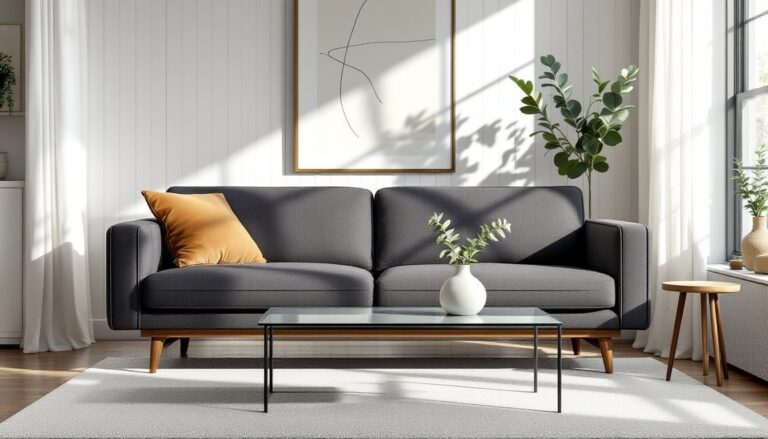
Start with a neutral foundation sofa in a durable fabric like linen, cotton-linen blend, or performance weave. Rolled or English arms read more classic: track arms lean modern. A tight-back sofa (no loose cushions) offers cleaner lines, while a bench-seat or single-cushion deck looks more tailored than multiple seat cushions.
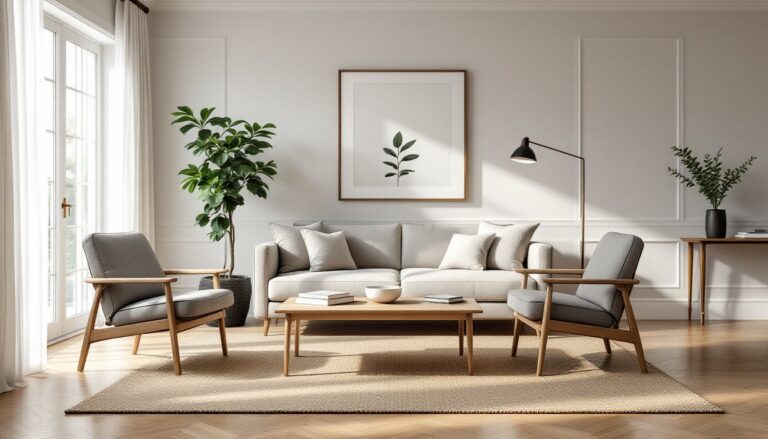
Pair the sofa with one or two accent chairs, wingbacks, slipper chairs, or mid-century armchairs work well. Mixing chair styles adds visual interest as long as the scale is consistent. If your sofa is low-profile (seat height around 17–18 inches), don’t pair it with a tall wingback that towers over it.
A coffee table in wood, marble, or glass anchors the seating area. Classic shapes include rectangular with tapered legs, round pedestal, or oval with a lower shelf. Avoid anything too rustic (distressed barn wood) or too industrial (raw steel frames), both clash with the refined aesthetic. A table height of 16–18 inches works for most standard sofas.
Side tables and consoles should match in material or finish, even if they’re not identical. Nesting tables offer flexibility in small spaces, and a narrow console behind the sofa can hold lamps and books without eating floor space.
For storage, consider a classic bookcase or étagère in painted wood or dark walnut. Open shelving keeps the room from feeling heavy, but if you need concealed storage, a low credenza or sideboard with simple hardware works better than bulky entertainment centers.
Choosing the Right Sofa and Seating Arrangement
Measure your room before shopping. A common mistake is buying a sofa that’s too large for the traffic flow. Leave at least 30–36 inches of clearance between the sofa and coffee table, and 24 inches minimum for walkways behind seating.
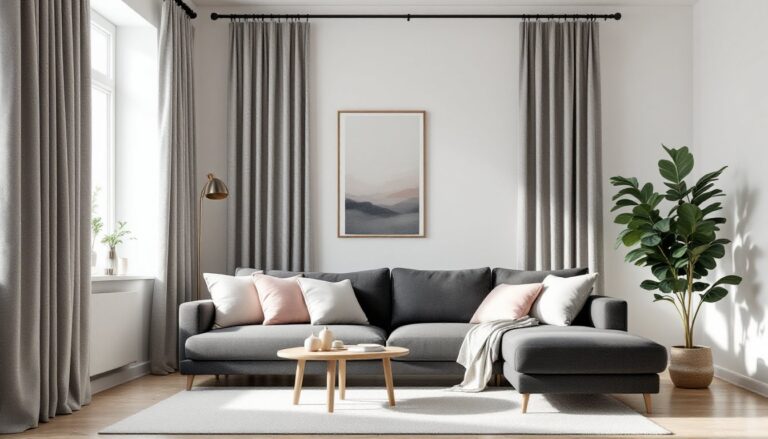
For a room around 12×16 feet, a sofa in the 84–90 inch range typically fits well, flanked by two chairs or a single chaise. In larger spaces (16×20 feet or more), you can go up to a 96-inch sofa or create a sectional arrangement, but keep one arm open to avoid blocking sightlines.
Symmetry matters in modern classic design. If you’re centering the sofa on a fireplace or large window, flank it with matching side tables and lamps. If the room layout is asymmetrical, balance visual weight instead, a tall plant or floor lamp on one side can offset a bulky chair on the other.
Avoid pushing all furniture against the walls. Floating the sofa a few feet into the room (even just 12–18 inches) creates a more intimate conversation area and makes the space feel intentional rather than like a waiting room.
Color Palettes That Bring Modern Classic Rooms to Life
Modern classic living rooms typically anchor in neutrals: soft whites, warm grays, greiges, taupes, and creamy off-whites. These shades let architectural details and furniture forms take center stage without competing for attention. Paint walls in a single neutral tone (Benjamin Moore’s Classic Gray or Sherwin-Williams’ Accessible Beige are reliable go-tos), and keep trim and molding in a brighter white (such as Benjamin Moore’s Decorator’s White) for contrast.
Accent colors should be muted and sophisticated rather than bright or trendy. Deep navy, charcoal, sage green, or warm terracotta work well in upholstery, throw pillows, or a single accent wall. Avoid neon or overly saturated hues, they skew too contemporary and break the classic restraint.
For those willing to experiment, incorporating colorful living room schemes like soft lilac or muted blush can add personality without overwhelming the space. These tones pair beautifully with natural wood and brass accents, maintaining the balance between modern freshness and classic elegance.
Wood tones should be consistent but not matchy. If your flooring is a medium oak, furniture can be walnut or painted finishes, just avoid mixing too many wood species in one sightline. Natural or white oak floors offer a lighter, more modern feel: darker espresso or mahogany reads more traditional.
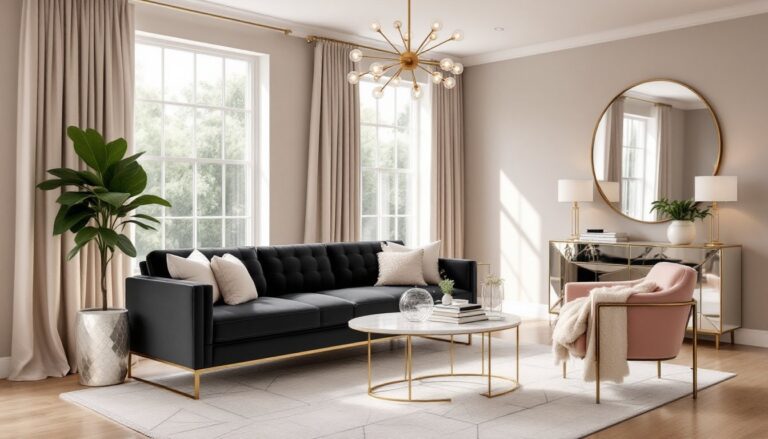
Metallic finishes, brushed brass, antique bronze, or matte black, add warmth and sophistication. Mix metals sparingly: brass table lamps, black iron curtain rods, and a chrome faucet in an adjacent powder room won’t clash as long as each finish has enough presence to feel intentional.
Layering texture through color also matters. A cream linen sofa against a pale gray wall might feel flat without deeper tones in the rug, curtains, or artwork. A charcoal wool rug or navy velvet pillows can ground the palette and prevent the room from looking washed out.
Lighting Design for Balanced Ambiance
A modern classic living room needs three layers of light: ambient (overhead or recessed), task (reading lamps, picture lights), and accent (sconces, uplighting). Relying on a single overhead fixture flattens the room and kills the mood.
Start with ambient lighting. If you’re installing new fixtures, a centered ceiling fixture or chandelier works in formal layouts, while recessed cans on a dimmer offer flexibility in open-plan spaces. Space recessed lights 4–6 feet apart and avoid placing them directly over seating, glare from above is uncomfortable. If your ceiling height allows, a statement chandelier in 24–30 inch diameter (for a room around 12×16 feet) adds classic elegance without overwhelming the space.
For task lighting, place table lamps on side tables flanking the sofa or chairs, with shades at eye level when seated (bottom of shade around 40 inches from the floor). Use bulbs in the 2700K–3000K range (warm white) to avoid harsh, clinical light. Swing-arm sconces mounted 54–60 inches from the floor work well for reading nooks and free up surface space.
Accent lighting highlights architectural details or artwork. Picture lights mounted above framed pieces, or small LED strip lights inside built-in shelving, add depth and drama. In rooms with contemporary design features, adjustable track lighting can spotlight sculptural furniture or textured wall treatments.
Dimmers are non-negotiable. Even budget-friendly slide dimmers (around $15–$25 per switch) let you shift the room from bright and functional during the day to warm and intimate in the evening. If you’re replacing switches, make sure your bulbs are dimmable LEDs, not all LEDs dim smoothly, and cheap ones can flicker or buzz.
Window treatments also affect lighting. Sheer linen or cotton curtains diffuse daylight without blocking it entirely, while heavier drapes in velvet or wool provide blackout capability for media viewing. Mount curtain rods 4–6 inches above the window frame and extend them 6–12 inches beyond each side to make windows look larger and let in maximum light when open.
Textures, Materials, and Finishing Touches
Modern classic design thrives on tactile contrast: smooth marble against nubby linen, polished wood next to matte plaster, soft wool rugs over hardwood floors. These layers keep a neutral palette from feeling sterile.
For upholstery, choose natural fibers like linen, cotton, or wool over synthetics. Linen wrinkles easily but softens with age and resists pilling. Performance fabrics (like Crypton or Sunbrella) now come in sophisticated weaves that mimic linen’s texture while repelling stains, useful for high-traffic homes.
Area rugs define seating zones and add warmth underfoot. A 9×12-foot rug fits most standard living rooms, with the front legs of all major furniture pieces (sofa, chairs) sitting on the rug. Hand-knotted wool rugs in traditional Persian or Turkish patterns read classic: flat-weave or low-pile styles lean modern. Avoid shaggy or high-pile rugs, they clash with the clean lines.
Wood finishes should be matte or satin, not high-gloss. Glossy furniture feels dated and shows every fingerprint. For painted pieces, a durable satin or eggshell sheen in soft white or gray offers easy cleaning without the plasticky look of semi-gloss.
Accessorize with intention. A large mirror (at least 36 inches wide) above a console or fireplace bounces light and expands the room visually. Frame it in carved wood, brass, or matte black for a classic-modern mix. Artwork should be scaled appropriately, a single large piece (48×60 inches or bigger) makes more impact than a gallery wall of small prints.
Pillows and throws add softness but shouldn’t overcrowd the sofa. Three to five pillows in varying sizes (22-inch, 20-inch, and 18-inch squares, or a mix of square and lumbar) is plenty. Stick to two or three coordinating fabrics: a solid linen, a subtle stripe, and a textured weave. Avoid busy patterns or logos.
Fresh or faux greenery softens hard edges. A fiddle-leaf fig or rubber plant in an 8–10 inch pot adds height in a corner, while smaller succulents or herb pots cluster nicely on shelves. If you’re using faux, invest in high-quality silk plants, cheap plastic foliage looks worse than no greenery at all. Many interior design resources showcase how live plants and natural elements enhance both classic and contemporary rooms.
Finally, don’t skip the details. Swap builder-grade switch plates for smooth, screwless covers in white or brushed metal. Replace hollow-core doors with solid wood or five-panel Shaker-style doors. Upgrade cabinet hardware to brushed brass or matte black pulls. These small changes cost less than $200 for an average living room but elevate the entire space.
Conclusion
A modern classic living room doesn’t happen by accident, it’s the result of intentional choices about proportion, restraint, and quality materials. By anchoring the space in timeless furniture forms and neutral palettes, then layering in contemporary finishes and lighting, anyone can build a room that feels both elegant and livable. Skip the trends, invest in pieces that age well, and trust that less clutter always wins.