Table of Contents
ToggleModern living room art has become one of the most effective ways to transform a blank wall into a focal point without picking up a paintbrush or hiring a contractor. The right piece can anchor a seating area, balance a room’s proportions, or add color to a neutral palette. But choosing and hanging art isn’t as simple as scrolling through online galleries and ordering the first print that catches your eye. Scale, placement, and installation method all matter, especially if you’re working with heavyweight canvases, gallery walls, or rental-friendly systems. This guide walks through the practical side of selecting modern art that fits your space and mounting it securely without unnecessary wall damage or misaligned hangers.
Key Takeaways
- Modern living room art with clean lines and bold abstraction transforms neutral spaces into intentional focal points without structural renovation or major expense.
- Proper scale and placement are critical: artwork above a sofa should span two-thirds to three-quarters of its width, with the piece’s midpoint at 57–60 inches from the floor for optimal visual impact.
- Abstract and geometric art adapts best to modern living rooms because it’s interpretive, while black-and-white or limited-palette photography pairs with any color scheme and suits renters.
- Secure installation depends on wall type and artwork weight: use picture hangers for pieces under 20 lbs, toggle bolts or studs for heavier work, and adhesive strips as damage-free alternatives for renters.
- Mock up gallery wall layouts with painter’s tape before drilling, maintain 2–3 inches of spacing between frames, and use D-rings with picture wire for professional weight distribution and micro-adjustments.
- Picture lighting at 3000K–4000K color temperature elevates art from decoration to focal point by highlighting composition and preventing color washout.
What Defines Modern Living Room Art?
Modern living room art typically refers to pieces created from the late 19th century forward, emphasizing clean lines, bold color, abstraction, and a break from traditional realism. In practical terms, it’s art that feels current, minimalist line drawings, oversized abstract canvases, black-and-white photography, geometric prints, or mixed-media pieces with industrial elements.
The distinction between “modern” and “contemporary” gets blurry in everyday use, but technically modern art refers to a specific movement (roughly 1860s–1970s), while contemporary art is being created now. For living room purposes, both terms overlap. What matters more is whether the style complements the room’s architecture and furnishings.
Modern pieces work especially well in open-concept spaces with high ceilings, where scale and negative space play a bigger role than in traditional compartmentalized rooms. They tend to avoid ornate frames, heavy gilding, or busy patterns that compete with furniture. Instead, they lean into simplicity, contrast, and intentional composition.
Materials matter too. Canvas stretched over wooden frames, metal prints, acrylic-mounted photography, and frameless floating panels are all common formats. Each has different weight and hanging requirements, which directly affects your installation approach later.
Choosing the Right Art Style for Your Modern Living Room
Abstract and Geometric Art
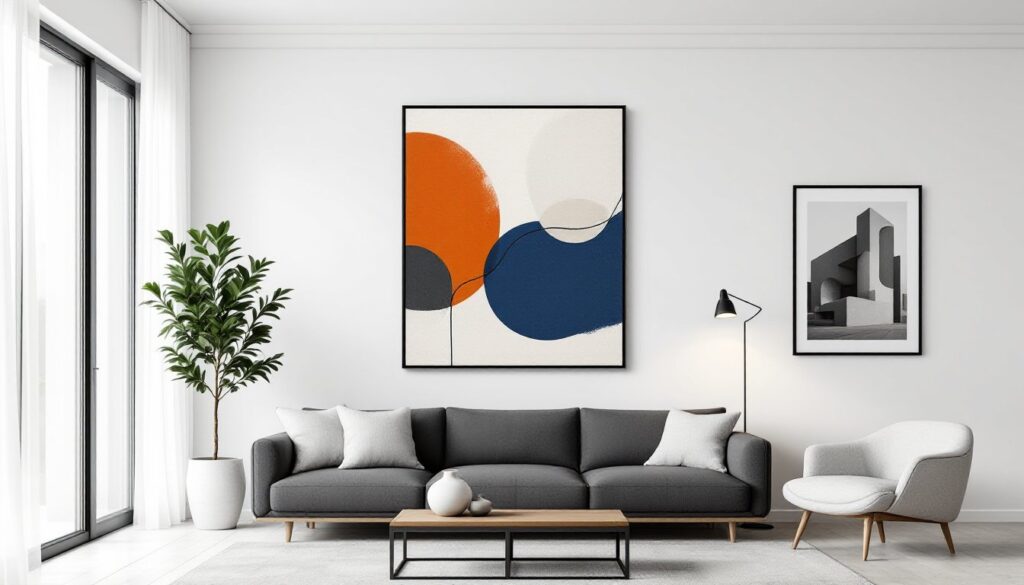
Abstract art is the go-to for modern living rooms because it’s interpretive and adaptable. A large-scale abstract canvas in blues and grays can pull together a neutral sectional and weathered wood coffee table without dictating a single design direction. Geometric art, think hard-edged shapes, repeating patterns, or color-blocked compositions, adds structure and rhythm to a space.
When selecting abstract pieces, consider the room’s existing color palette. If walls, flooring, and upholstery are neutral, the art can introduce accent colors. If the room already has bold furnishings, a monochrome or muted abstract piece prevents visual overload. Many modern wall art collections include both prints and one-of-a-kind originals, giving flexibility in budget and exclusivity.
Scale is critical with abstract work. A 24″ × 36″ piece will disappear over a full-size sofa. Budget for something in the 40″ × 60″ range or larger if it’s the primary focal point. Triptychs (three-panel sets) are another option, they create visual impact without requiring a single oversized frame, and you can adjust spacing to fit your wall width.
Avoid overly busy abstracts in small rooms. They compress the space visually. Simpler compositions with generous negative space make a room feel larger.
Minimalist and Contemporary Photography
Minimalist photography, architectural details, landscapes with strong horizon lines, black-and-white portraits, brings a gallery-quality feel without the price tag of original paintings. Contemporary photography also suits renters and DIYers who want something sophisticated but replaceable as tastes evolve.
Black-and-white prints are safe bets. They pair with any color scheme and lend a timeless quality. For color photography, look for images with a limited palette (two to three dominant hues) that tie into your room’s accents. A coastal landscape in soft blues works in a living room with navy throw pillows and linen curtains.
Print quality and mounting method matter more with photography than with abstract art. Cheap inkjet prints fade and look washed out under natural light. Look for giclée prints on archival paper or metal prints for high-traffic, sunlit rooms. Metal prints (dye-sublimated onto aluminum) are lightweight, durable, and don’t need glass, which simplifies hanging.
Framing choices affect the modern vibe. Thin metal frames in black, white, or natural wood keep the focus on the image. Thick, ornate frames pull photography back toward traditional territory. Frameless options, like float-mounting on acrylic or foam board, maximize the contemporary look and reduce glare.
How to Select the Perfect Size and Scale
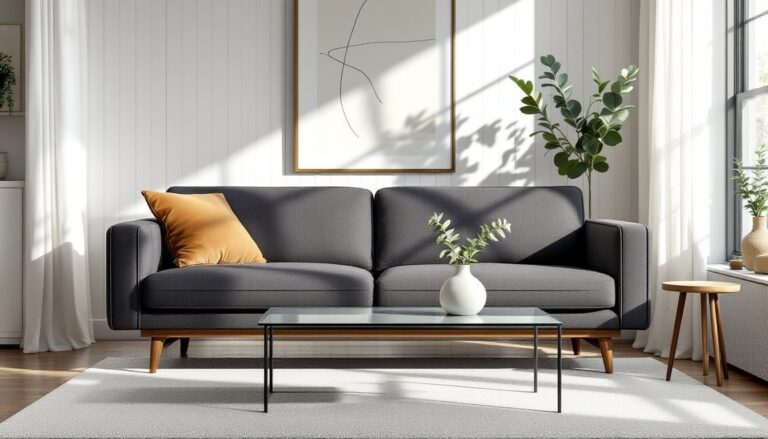
Art that’s too small looks like an afterthought. Art that’s too large overwhelms the furniture and crowds the wall. The standard rule: artwork above a sofa should span two-thirds to three-quarters of the sofa’s width. For an 84″ sofa, aim for a piece (or grouping) between 56″ and 63″ wide.
Height placement follows the 57″ to 60″ rule, center the artwork so its midpoint sits 57″ to 60″ from the floor. This is the average eye level in most homes and aligns with gallery standards. If your ceilings are unusually high (10 feet or more), you can cheat upward by a few inches, but don’t hang art so high that viewers strain their necks.
For gallery walls or multi-panel installations, mock up the layout on the floor first. Use painter’s tape on the wall to outline each piece’s position. This prevents extra nail holes and misaligned spacing. Keep 2″ to 3″ of space between frames for a cohesive look without crowding.
In rooms with vaulted or cathedral ceilings, oversized statement pieces (60″ × 80″ or larger) work better than small groupings, which get lost in the vertical space. Leaning a large canvas on a console table or mantel is a no-drill alternative that suits renters and commitment-phobes, just make sure it’s stable and won’t tip forward.
Consider the room’s function too. A living room used for TV watching benefits from art on adjacent walls, not directly above the screen where it competes for attention. In conversation-focused spaces, art above the sofa or fireplace becomes the natural focal point.
Displaying Your Art: DIY Installation Tips and Techniques
Hanging art securely depends on wall type, artwork weight, and whether you’re renting or own. Start by identifying your wall material: drywall, plaster, brick, or concrete. A stud finder locates wood framing members behind drywall (typically 16″ or 24″ on center), which provide the strongest anchor points.
For lightweight pieces (under 20 lbs), picture hangers (those angled nail hooks) work fine in drywall. Use two hooks spaced 8″ to 12″ apart for stability. For heavier canvases (20–50 lbs), anchor into studs with wood screws or use toggle bolts (also called butterfly anchors) in hollow drywall. Toggle bolts expand behind the drywall, distributing weight across a larger area.
If studs don’t align with your desired placement, use drywall anchors rated for the artwork’s weight. Plastic ribbed anchors are weak, skip them for anything over 10 lbs. Metal self-drilling anchors or molly bolts are better. Always check the package’s weight rating and stay below it by 20% for a safety margin.
D-rings and wire are the professional standard for canvases and framed pieces. Attach D-rings one-third of the way down from the top of the frame, thread picture wire between them (leave 2″ to 3″ of slack), and twist the ends securely. This setup centers the weight and allows micro-adjustments after hanging. Wire cutters and needle-nose pliers make the job easier.
For renters or those avoiding wall damage, adhesive strips (like Command Picture Hanging Strips) hold up to 16 lbs per set and remove cleanly. Follow the instructions exactly, press for 30 seconds, wait an hour before hanging. They fail when walls are dusty or textured, so wipe the surface with rubbing alcohol first.
Gallery wall installations require more planning. Use a laser level or a 4-foot bubble level to mark a horizontal baseline. Paper templates (trace each frame onto kraft paper, tape to the wall) let you visualize spacing before committing to nails. Start from the center and work outward, checking level after each piece.
For very heavy art (50+ lbs), especially large metal prints or thick wood frames, consider French cleats, interlocking wood or metal strips, one mounted to the wall (into studs), the other to the artwork. They distribute weight evenly and allow easy removal without patching holes. You can build simple wood cleats by ripping a 1×4 at a 45° angle on a table saw.
Safety reminder: Wear safety glasses when drilling or hammering overhead. Drywall dust and plaster fragments fall directly into your face. Keep a cordless drill, level, tape measure, and pencil in a small toolkit dedicated to hanging projects, you’ll use them repeatedly.
Lighting elevates art from decoration to focal point. Picture lights (small fixtures mounted above the frame) require hardwiring unless you use battery-powered or plug-in versions. Track lighting or adjustable can lights offer more flexibility and don’t require new electrical boxes. Aim for 3000K–4000K color temperature to avoid washing out colors or creating harsh shadows.
Conclusion
Selecting and installing modern living room art doesn’t require a design degree or contractor-level skills, just attention to scale, honest assessment of your walls, and the right hardware for the job. Take measurements seriously, mock up placements before drilling, and don’t skimp on proper anchors for heavy pieces. The result is a room that feels intentional and finished without a major renovation or a four-figure budget.