

In the ever-evolving world of artificial intelligence, ChatGPT models are like the Swiss Army knives of conversation. They’re versatile, adaptable, and always ready to tackle your queries—whether you need a witty comeback or a deep dive into quantum physics. But wait, there’s more! Just like ice cream flavors, these models come in different varieties, each with its own unique twist.
Overview of ChatGPT Models
ChatGPT models vary significantly in their design and functionality. Each model caters to specific needs, enhancing user experiences with tailored responses.
The original ChatGPT, known for its foundational capabilities, serves general queries with a solid understanding of language. Subsequently, advancements led to enhanced versions, like ChatGPT-2, which improved coherence and context retention.
ChatGPT-3 showcases remarkable language generation abilities, featuring 175 billion parameters. This model excels at producing human-like text, allowing for more natural interactions. Notably, its ability to handle complex prompts sets it apart from earlier versions.
Further iterations, such as ChatGPT-3.5, optimize performance by refining understanding and response quality. Multiple applications stem from these enhancements, spanning customer service to creative writing.
The latest models utilize fine-tuning techniques, adapting to specific domains with increased precision. Developers harness these advancements to create targeted solutions for industry requirements.
Understanding these distinctions among ChatGPT models leads to informed choices based on intended applications. Each model’s unique attributes empower users to leverage the technology effectively. Through continued iterations, the evolution of ChatGPT reflects a commitment to advancing artificial intelligence.
Evolution of ChatGPT Models
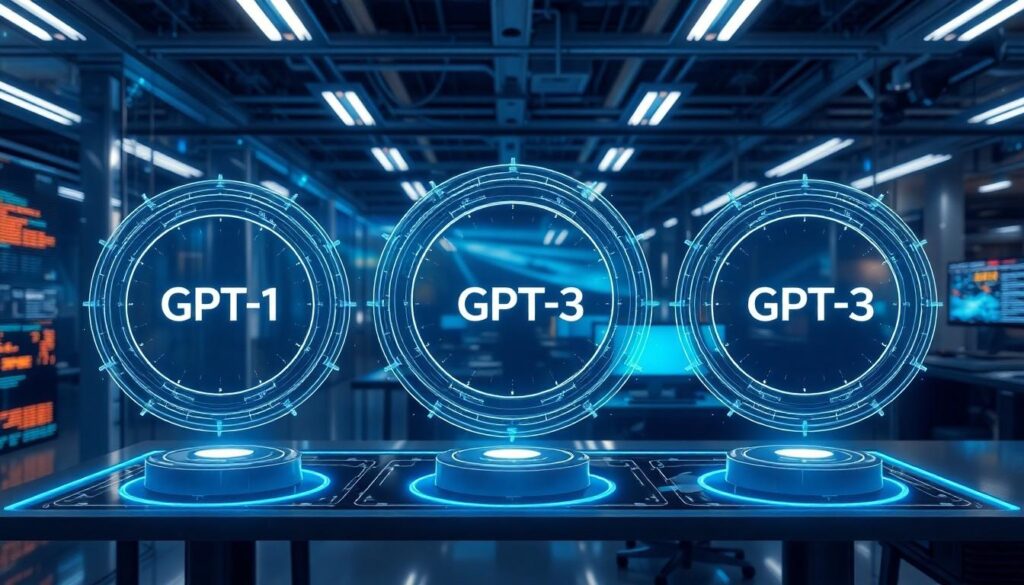
ChatGPT models have undergone significant transformations, shaping the landscape of artificial intelligence.
GPT-1: The Genesis
GPT-1 marked the beginning of the GPT series. With 117 million parameters, it introduced a novel approach to language processing. This initial model focused on generating coherent text based on provided prompts. Developers aimed to demonstrate the potential of unsupervised learning on large datasets. Its performance established a foundation for future advancements in natural language understanding.
GPT-2: Breaking Boundaries
GPT-2 expanded the capabilities seen in its predecessor. Boasting 1.5 billion parameters, the model exhibited enhanced fluency and versatility in text generation. This upgrade allowed for more nuanced understanding of context, enabling more meaningful interactions. The model’s size attracted attention, prompting discussions about AI safety and ethical considerations. It showcased the potential for applications in various fields, from content creation to dialogue systems.
GPT-3: A Leap Forward
GPT-3 represented a major leap in the evolution of ChatGPT models. With an astonishing 175 billion parameters, it excelled in producing human-like text across diverse topics. This model significantly improved coherence and contextual relevance in responses, making it more effective for complex tasks. Developers leveraged this capacity for numerous applications, including coding assistance and creative writing. Its advancements solidified its role as a cornerstone in AI language processing technology.
Current Versions of ChatGPT
ChatGPT models have evolved significantly to accommodate diverse user needs in artificial intelligence. Recent iterations provide enhanced functionalities tailored to specific applications.
ChatGPT-3.5: Enhancements and Features
ChatGPT-3.5 introduces substantial improvements in understanding context and generating coherent responses. This model builds upon its predecessor, focusing on refining the dialogue flow and offering more relevant answers. Enhanced training data allows it to grasp nuanced queries effectively. Increased adaptability when dealing with complex subjects sets it apart. Businesses leverage this model for applications in customer support and content creation, benefiting from its heightened performance.
ChatGPT-4: What’s New?
ChatGPT-4 brings further advancements with a focus on multi-modal capabilities. This version supports inputs beyond text, enhancing its utility in various domains such as visual analysis and data interpretation. It excels in generating highly personalized responses tailored to user preferences. The model demonstrates a deeper understanding of complex topics and improved problem-solving skills. With an expanded parameter size, ChatGPT-4 represents a leap in language processing technology, opening new opportunities for innovation across industries.
Applications of ChatGPT Models
ChatGPT models demonstrate versatile applications across numerous fields. They cater to specific needs and enhance efficiency in various tasks.
Use in Customer Support
ChatGPT models excel in customer support roles by providing instant responses to frequently asked questions. Organizations utilize these models to improve response times and reduce operational costs. Many businesses implement ChatGPT for chatbots, automating interactions while maintaining high-quality service. Personalization features allow these models to tailor responses based on user history, enhancing customer satisfaction. Studies show that leveraging AI in customer support results in a 40% reduction in handling time, allowing human agents to focus on complex inquiries.
Use in Content Creation
Content creators increasingly use ChatGPT models to streamline the writing process. These models generate ideas, outlines, and even complete drafts, significantly reducing time spent on brainstorming. With advanced capabilities, they help maintain a consistent tone and style, ensuring coherence across multiple pieces. Many bloggers and marketers turn to ChatGPT for generating SEO-optimized content, increasing visibility while saving valuable time. Reports indicate that content production can be up to 50% faster when integrating AI tools, enabling creators to focus on strategy and engagement.
Limitations of ChatGPT Models
ChatGPT models possess certain limitations that users should recognize. Understanding these constraints aids in effectively utilizing the technology.
One significant limitation is context length, where earlier models like ChatGPT-3 could handle approximately 2048 tokens. This constraint affects the ability to maintain coherence in extensive conversations.
Another issue involves factual accuracy. Periodically, ChatGPT generates responses that may present incorrect or outdated information. This occurrence highlights the importance of verification, especially in critical applications such as medical or legal advice.
Models also struggle with deep reasoning. While they excel at generating text, complex logical deductions often pose challenges. Tasks requiring intricate problem-solving may not yield satisfactory outcomes.
Furthermore, biases in training data can lead to biased outputs. ChatGPT reflects the societal biases contained within the datasets used for training, potentially resulting in unintended perpetuation of stereotypes.
Real-time data handling remains a challenge as well. The models do not access or incorporate up-to-the-minute information, limiting their relevance in rapidly changing contexts such as news and trends.
Deployment scenarios may also unveil issues. In settings like customer support, heavy reliance on ChatGPT can lead to oversimplified responses, which might not meet customer expectations.
Finally, adaptability concerns emerge when considering specialized knowledge. While newer versions may exhibit enhanced contextual understanding, they still lack domain-specific expertise compared to tailored systems.
By recognizing these limitations, users can better navigate the capabilities of ChatGPT models, allowing for more informed decisions in their applications.
Future of ChatGPT Models
Advancements in ChatGPT models illustrate a trend toward increased customization and specialization. Future iterations will likely focus on domain-specific adaptations, optimizing performance for various industries such as healthcare, education, and finance. Enhanced capabilities in natural language understanding will drive improvements in user interactions, fostering more human-like conversations.
Developments in multi-modal capabilities highlight another direction for future models. These advancements enable the processing of text, images, and audio inputs, broadening application possibilities. Expectations include the integration of real-time data access, enhancing relevancy in fast-paced environments.
Innovations in fine-tuning and transfer learning will further refine ChatGPT’s ability to understand niche topics. Models may evolve to incorporate user feedback more effectively, promoting user-centric designs that enhance satisfaction. Greater emphasis on reducing biases within training datasets will support the creation of more equitable outputs, addressing societal concerns.
Applications in augmented reality (AR) and virtual reality (VR) may emerge as future ChatGPT models adapt to immersive experiences. Potential exist for interactive educational tools that utilize AI-driven conversations, making learning more engaging and personalized. Predictions indicate a shift toward collaborative AI platforms where users and models co-create content seamlessly.
Regulatory considerations will shape the deployment of future ChatGPT models. Ensuring compliance with ethical guidelines and safety standards will become paramount as these technologies become more integrated into daily life. Expectations also highlight a continued focus on transparency, allowing users to understand the decision-making processes of AI models.
Overall, the future of ChatGPT models represents a promising landscape driven by constant evolution and innovative solutions aimed at improving user experiences across diverse fields.
The evolution of ChatGPT models showcases their growing capabilities and adaptability in various applications. Each iteration brings advancements that enhance user experiences through improved language understanding and response generation. As these models continue to develop, they promise to address existing limitations while offering tailored solutions for specific industries.
Looking ahead, the focus on customization and specialization indicates a bright future for ChatGPT technology. Innovations in multi-modal capabilities and refined natural language understanding will further expand its potential. By staying informed about these developments, users can leverage ChatGPT models effectively, ensuring they maximize their benefits in an ever-evolving digital landscape.